How Often Should You Sealcoat an Asphalt Driveway in Georgia?
Sealcoat an asphalt driveway about every 2 to 5 years. That interval is published, not a rule of thumb. The Asphalt Institute says a well built low traffic pavement, such as a driveway or parking lot, “should not require sealing for approximately 2 to 5 years.” A state asphalt pavement association driveway guide says the same: a high grade asphalt liquid sealer every two to five years.
Georgia pushes most driveways toward the short end of that window. Sun, heat and heavy rain age a surface faster than a mild climate does.
How often should you sealcoat a driveway in Georgia?
Start with 2 to 5 years, then let the pavement decide. A drive in full sun with daily traffic gets there sooner, a shaded drive with light use later.
One national cost guide puts it in homeowner terms: every three years in a mild climate, every other year in extreme heat or cold. North Georgia brings both. A two to three year rhythm for driveway sealcoating is common here, and four or five years is fine on a quiet, shaded drive. Sealing every single year is not what the trade bodies call for, and extra coats add film thickness, not strength.
How do Georgia sun, heat and rain change the interval?
The Pavement Coatings Technology Council says sealcoat protects pavement from the aging caused by sunlight, water and debris. Around Cartersville there is plenty of each. NOAA’s 1991 to 2020 climate normals for the Cartersville airport station show 48.06 inches of rain a year, 55.4 days at or above 90 degrees, and 67.5 nights at or below freezing.
That works on asphalt two ways. Summer sun dries and hardens the binder at the surface, and winter freeze and thaw pries open what the sun started.
How long should you wait to seal a brand new driveway?
Let the asphalt cure first. The council’s best practices say hot mix asphalt will usually cure in 30 to 90 days, and cold mix pavements should have at least 90 days. The state association driveway guide is more cautious for homes: “Don’t apply sealer until the driveway is at least several months old.”
You will hear “wait 6 to 12 months” a lot. That figure comes from neither source. If you just had a new asphalt driveway put in, 30 to 90 days of cure plus a look at the surface is the sourced answer.
When is the right weather window in north Georgia?
Warm, dry and sunny. The council’s best practices call the ideal conditions temperatures above 70 degrees, direct sunlight and relative humidity under 60 percent.
Four things have to line up. Air temperature at a minimum of 50 degrees and rising. Pavement temperature at 60 degrees and rising. No sealer if rain is imminent or likely. Two hours of daylight left after the work is done.
The council is flat about the rest. Under no circumstances is work performed in cold, under 50 degrees, or wet conditions. Sealing season here runs from spring into early fall.
What are the signs a driveway is due for sealer?
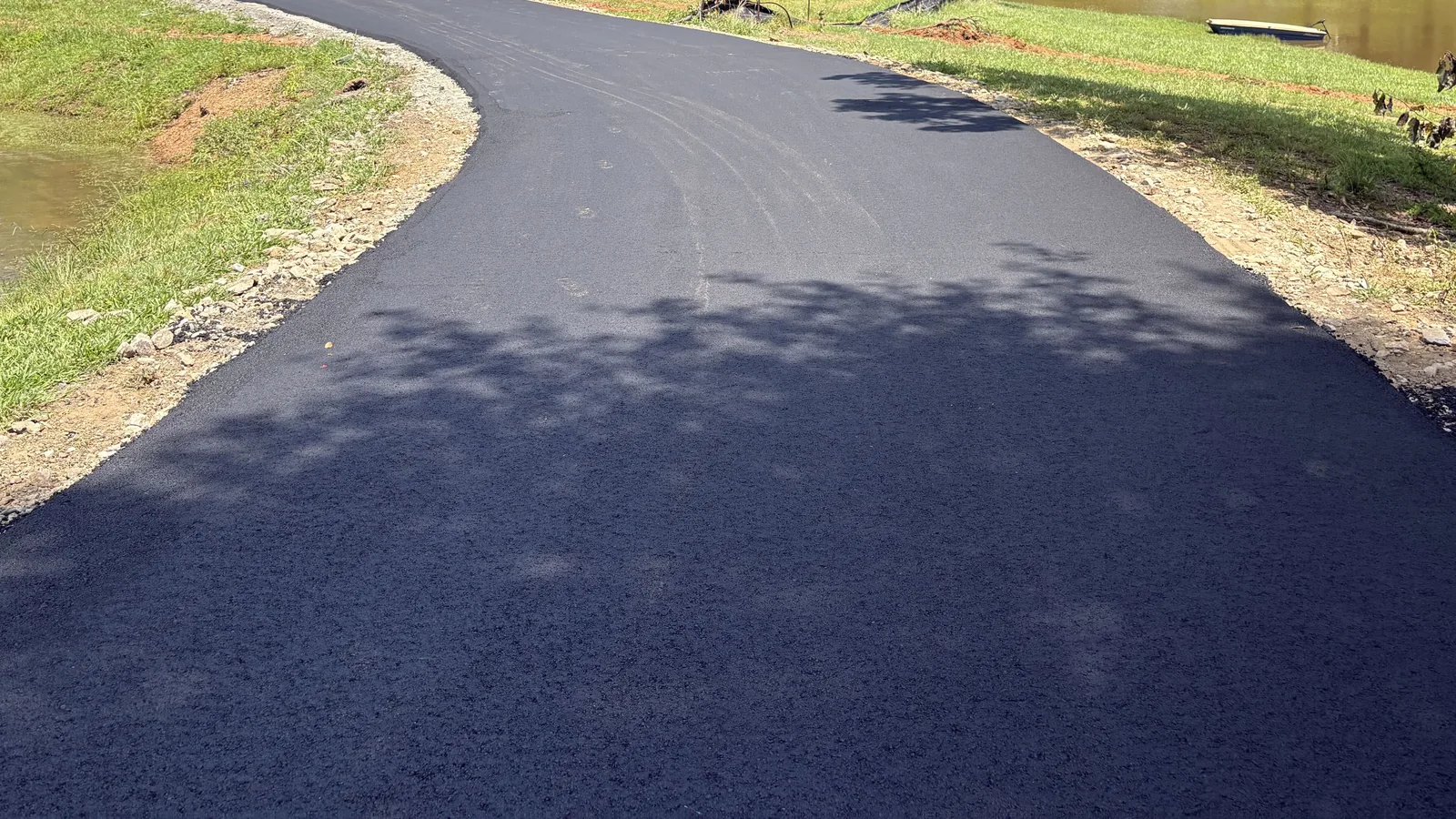
Color is the first clue. New asphalt is black. A drive that has faded to gray has weathered, and the council’s prep steps treat highly oxidized or weathered surfaces as their own case.
The Asphalt Institute lists what sealing is good for. It renews “old asphalt surfaces that have become dry and brittle with age,” seals “small surface cracks and surface voids,” and inhibits “raveling (loss of surface aggregate).” In yard terms: gray and dry looking, fine cracks spreading, loose stone coming off the top.
When will sealcoat not help?
When the trouble is under the surface. The council’s rule is short. “Wide cracks, extensive alligator cracking patterns, soft or sunken spots indicate that the pavement and/or base should be repaired or replaced.”
Georgia DOT says the same about load cracking. Its resurfacing guide calls continuous or widespread cracking in the wheel paths “clear evidence of inadequate structural strength.” Sealer is a coating and it carries no load. Potholes, sunken areas and cracking that looks like alligator hide call for asphalt repair and patching first.
Is sealcoating worth it, or is sealing your driveway pointless?
The fair version: sealcoat adds no structure and fixes no failing base. It will not save pavement that has already given out.
What it does do is on the record. The council says it protects pavement from sunlight, water, debris and leaking oil and gas. The Asphalt Institute says it renews dry, brittle surfaces, seals small cracks and voids, and slows raveling.
Sealer type is a fair question too. USGS says most sealcoat products are either coal tar or asphalt emulsion. It puts coal tar based sealcoat at 20 to 35 percent coal tar or pitch, carrying about 1,000 times more of the compounds called PAHs than the asphalt based kind. Some places restrict coal tar sealers. Ask which kind is going on your pavement.
What does a proper sealcoating job include?
The council’s best practices set the order. Let new asphalt cure. Look at the large cracks and decide whether the pavement needs repair instead. Clear and fill cracks roughly a quarter inch to three quarters of an inch wide, and ignore hairline ones.
Oil and grease spots get scrubbed with detergent and flushed. Deeper spots get torched, then coated with an oil spot primer. Badly oxidized pavement can be primed, and that primer cures 24 hours before sealer goes on.
The surface is swept or blown clean right before application. Sealer goes on by squeegee, brush or spray. A second coat goes down only after the first has thoroughly dried.
What does driveway sealcoating cost?
These are market numbers from national cost guides, not a price list. Every driveway prices on its own square footage and condition.
| What is priced | Published range |
|---|---|
| Whole driveway, national average | $305 to $574 |
| Whole driveway, common range | $176 to $868 |
| Professional work, per square foot | $0.15 to $2.10 |
| Labor alone, per square foot | $0.60 to $1.75 |
| Sealer material alone, per square foot | $0.08 to $0.50 |
| Store bought sealer, per 5 gallon pail | $25 to $161 |
| Sealer coverage | about 100 square feet per gallon |
One guide prices a flat 20 by 20 foot driveway in fair condition at about $468. Another says a 500 square foot driveway takes about 5 gallons of sealant, $30 to $100 in material. Doing it yourself costs less in material and costs you the prep work. Crack and surface repair prices separately, about $3 per square foot in one guide.
What happens if it rains 24 hours after sealing a driveway?
It depends how far the film has cured. The council says sealers dry and harden through evaporation and sunlight, and water before that finishes “can result in delayed curing, discoloration and loss of film integrity.” Under marginal conditions, overcast skies and high humidity, up to 24 hours may be needed before the film can take a rain event. A hard rain inside that window can wash sealer into storm drains, which is why none goes down when rain is likely.
What is different about sealing a parking lot?
Traffic and size. A lot takes more sealer and more time out of service. Where a second coat is used, the council says it goes on after the first has dried, at right angles.
Barricades stay up until the sealer and any markings are “dry and hard enough to withstand traffic or any potential rain event.” The pavement may be swept one to two weeks later. Lines go back down after sealing, so plan restriping the stalls and markings into the same visit.
Where does your driveway stand?
Two to five years is the published interval. The color, the fine cracks and the loose stone tell you where yours sits. If the pavement under it is sound, sealing costs less than the repairs that come later.
We come out, look at the driveway or the lot and give you an estimate. Here is what a sealcoating job covers start to finish. Call or text (706) 844-2123.