What Does a Tar and Chip Driveway Cost in Georgia?
National cost guides put a tar and chip driveway at about $2 to $5 per square foot installed. One large guide lists $1 to $5 with a $3 average. Another lists $5 to $10. Hot mix asphalt runs about $7 to $13 per square foot in those same guides. Plain gravel runs about $1 to $3 per square foot. These are published market numbers, not our price list.
So the short answer is this. A tar and chip driveway costs less per square foot than hot mix asphalt. It costs more than gravel. On a long drive, square footage and base condition move the number most. That is where a tar and chip driveway estimate starts.
How does tar and chip compare with hot mix asphalt and gravel?
| Surface | Installed cost per square foot | Published life | Upkeep | Feel and look | Best fit |
|---|---|---|---|---|---|
| Tar and chip | about $2 to $5, up to $10 in one guide | about 10 to 15 years | sweep loose stone early, reseal later | coarse stone texture, country road look | long rural drives, farm lanes, private roads |
| Hot mix asphalt | about $7 to $13 | 12 to 30 years across guides | seal every 2 to 5 years, fill cracks, patch | smooth black mat | driveways and lots where smooth matters |
| Gravel | about $1 to $3 | 20 years and up with upkeep | add stone and regrade, at least yearly | loose stone, dust, ruts after rain | short lanes and light use |
Gravel keeps costing money after it goes down. One national guide prices regrading a worn gravel road at $0.50 to $2.20 per square foot. Hot mix costs the most up front and carries the longest published life. The hot mix numbers get a full run in the asphalt driveway cost post.
How is a tar and chip driveway built?
People call it tar and chip, chip seal or chip and seal. It is all the same work. Georgia DOT calls it bituminous surface treatment. Its Section 424 spec covers applications of bituminous material and aggregate over a prepared base or pavement.
The base comes first. The spec says to firmly compact, finish and prime new bases. Then hot liquid asphalt is sprayed down. Stone chips are spread over it before the asphalt sets. Rolling follows, at a pattern and speed that keys the stone into the asphalt.
A single surface treatment is one spray of asphalt covered with one size of stone. A double adds a second spray and a second, smaller stone on top. Georgia DOT’s rate table shows a double using close to twice the liquid asphalt and close to twice the stone. That is why a double costs more.
Weather gates the work. Georgia DOT sets a seasonal window by zone, running from spring into fall. It also bars asphalt cement below 65 degrees and emulsion below 55 degrees.
What drives the price of a tar and chip driveway?
Square footage comes first. Surface treatment is measured and paid by the square yard. Length and width set the base number. A 900 foot farm lane is a different job from a short drive at the house.
Base condition comes next. Tar and chip is a surface, not a structure. Georgia DOT says it “cannot correct an irregular road section, nor does it add significant structure to the underlying pavement.” A soft or rutted base gets fixed first, and that work carries its own cost. Georgia DOT flags the tipping point. Leveling over about 35 pounds per square yard can cost more than a hot mix overlay.
Then come the choices. Single or double. The stone size and group, which the spec sets job by job. One national cost guide says the type and color of stone you pick affects the total. Access counts too. An open lane with room to turn equipment is an easier site than a tight drive behind a house.
What are the disadvantages of tar and chip?
Loose stone in the first weeks is the main one. Georgia DOT says surface treatment “can lead to loose stone hazards during early stages of service.” Excess stone gets broomed off. Traffic stays slow until the binder has set up.
The texture is coarse. Georgia DOT describes “a coarse, open texture which provides good skid resistance but produces moderate noise levels.” A national research synthesis on chip seals agrees. Bigger stone brings more road noise and more risk of a thrown chip.
It does not handle shear. Georgia DOT says surface treatment “has little resistance to shear and should not be used in locations where multiple intersections are present.” Tight turning circles and heavy truck turns pull stone loose.
Where does tar and chip fit in north Georgia?
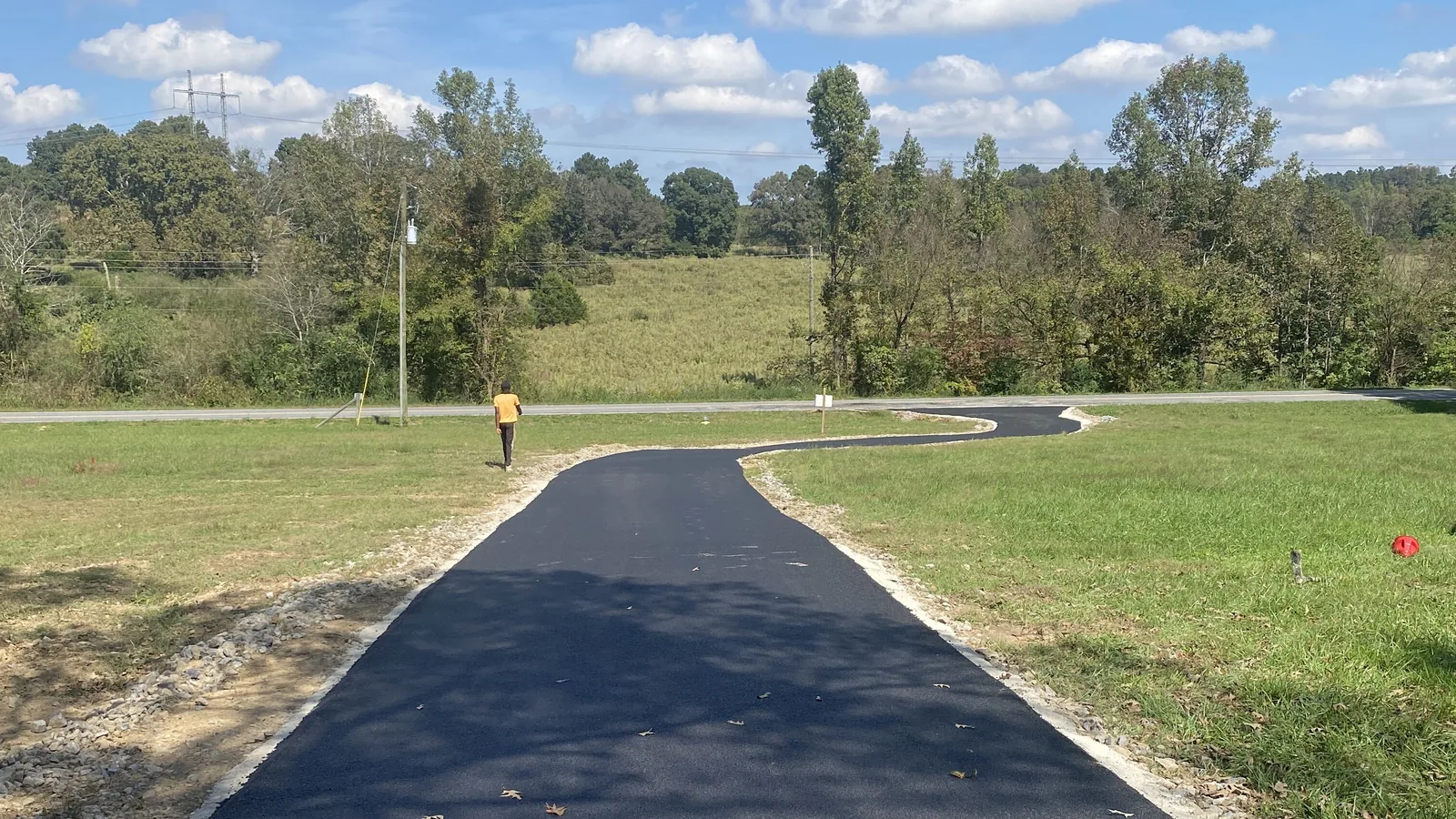
Long rural driveways are the best fit. Farm lanes between pasture fences. Private roads and shared drives serving a few houses. A steep gravel drive that washes to the bottom after every hard rain.
Georgia DOT lists surface treatment and hot mix together as surfacing for low volume roads and subdivision streets. Its best candidate is a low speed road with a sound base and good drainage. That covers a lot of ground around Cartersville, through Bartow County and out toward Rome.
Where the run is long and traffic is light, tar and chip covers more feet per dollar than hot mix. Where the road carries trucks or has to look finished, hot mix is the better call. Private road and farm lane paving and new asphalt driveways cover that side.
How long does a tar and chip driveway last and how is it renewed?
The Asphalt Institute puts the average life of a chip seal at five to eight years. Traffic and weather set where it lands. National cost guides run a little longer for driveways, at close to 10 years. One lists 10 to 15 years.
Renewal is another seal over the top. The national synthesis notes that a pavement may need three or four chip seals to reach its design life. Agencies with the best results reseal on a cycle shorter than the life they expect from a seal.
A seal does not fix a failed base. Soft spots, ruts and washouts get repaired before a fresh treatment goes down.
What should you do next?
Measure the drive and look at the base. Then decide between a single and a double treatment. Those choices move the number more than the stone you pick.
We come out, look at the site and measure it. The estimate spells out the square footage, the base work and the treatment. Read what goes into our tar and chip driveway work, or call or text (706) 844-2123.